Thursday, February 20, 2014

Lucky you, lucky me


Today I came within a razor’s breath of having a collision with another vehicle on the road. I was at a stop sign waiting to turn right. Yes, there was some waiting involved—you know, how  wrong is it that the traffic coming from the right clears only in time for a bunch of cars to show up from the left? And you have to, you know, wait for god’s sake, for both sides to clear. It’s clearly an imposition on the way things should be. It did finally clear on the right and I was certain that just the instant before there had been no traffic from the left, so I began to pull into my turn. But just as I did so a car sped by from that direction—I would say well over the speed limit—one that must have come into range in that fractional instant I had chosen to glance at the smart phone in my lap for that text or email you sent me and which you know you would not want me to delay in seeing. It was a very close call and I think it would have been rather worse for him—the other guy—as he would have hurtled into the collision front-end first, at high speed and very possibly without a seatbelt.

A couple of weeks ago a man whom I never knew, but who was well known in his west side Cleveland neighborhood as the proprietor of one of Cleveland’s happiest casual venues, died young and suddenly, after a tumble down a flight of steps. That’s it—he fell down a flight of steps, a stairwell at the tavern he co-owned, so one that he must have climbed up and down a thousand times. Maybe the steps were wet that night. Maybe he’d had a drink or two. Maybe, for god’s sake, a shoelace was loose.(And actually someone I knew, and who knew the venue, told me those steps were treacherous.) Any way, he fell and must have fallen hard, and fallen in just such a way that his brain needed to darken the lights, permanently.

And last month, very early in the morning, a terrible fire broke out in the house where I lived. It was confined to the unit above me, where my landlady lived, but this was not a small kitchen fire gone a little out of control. The unit upstairs was largely destroyed, and I saw my landlady, whom I know and like as someone fair and friendly, carried out by firemen into the sub-zero night, unconscious and barely breathing. She survived, owing to the firemen and the EMS and the doctors and nurses at the burn unit where she was taken (in fact, she wasn’t burned, but suffered extensive smoke inhalation). But this could not have been confidently predicted when I saw her carried out in the frigid night, as my dog and I, bewildered, loitered amidst the fire trucks and cop cars and cops assembled in the street.

Though I would have to move abruptly, I do not feel in any way “traumatized” by this event, or aggrieved. (I was terrified, yes, at being woken by fire fighters pounding on my doors, storming the building, busting open locks in the house with a thunderous crash; and I was mortified at the sight of my landlady being carried out, something I will not quite forget.). The “event” itself was over rather quickly, owing again to the great skill and courage of the firefighters on the scene. And the truth is that while it was happening I never felt myself to be in personal danger.

However, I know that this could have changed quickly, and might have been—with the altering of a detail or two—a very different story. (It was the couple next door, unable to sleep, who saw the smoke coming from the second story windows and called 911.) And I have carried away from the episode a sense of something profound having passed my way—a sense of how quickly your life can change, of the hairpin turns it can take while you are, literally, asleep. And of the randomness of events. Awareness of randomness, of the absence of order in the universe, of a rational scheme to things, feels like an encompassing theme of middle age—or my middle age, at any rate. Who can fathom the meaning, an “intelligent design” behind a random tumble down a flight of stairs, the near miss at the traffic intersection, a sleepless couple who saved a life (and maybe mine) with a phone call?

In a whimsical, wise and unpretentious book written as a series of alphabetized observations, Laurie Kraus-Rosenthal, in “The Encyclopedia of an Ordinary Life,” remarks on the ordinariness of random deaths.

There are so many ways to die at any given moment. Just look, look at all those ambulances in your rearview mirror. There are crashes and wrecks and collisions galore: cars, planes, Amtraks, ferries. You could have a heart attack; it’s not unlikely. A terminal illness you didn’t even know you had could, minutes from now, live up to its defining adjective. Now turn your attention to all the freak accidents lurking in the wings. A massive store display tips over (happened). A soccer goal post unroots itself and crushes a skull (happened). Shelving holding five thousand pounds of sheet metal or lumber at Home Depot collapses (imagined). A top bunk falls onto the bottom bunk (imagined). A strong wind unhinges scaffolding and blows it directly onto a sports car; inside are—were—two twenty-year-olds out shopping (happened). Aneurisms that burst midsentence, ending the life of an advertising executive, a promising playwright, a children's book author (happened, happened, and happened)…. People are just dying everywhere, all the time, every which way. What can the rest of us do but hold on for dear life.


Indeed. Is there anything more ordinary than dying, even when it happens in ways we think are startling or extraordinary? Is it possible that the really extraordinary thing is that we survive so many moments, one after the other? And then there is this scarily reproachful poem entitled “New Year’s Eve,” by Carl Dennis:

However busy you are, you should still reserve
One evening a year for thinking about your double,
The man who took the curve on Conway Road
Too fast, given the icy patches that night,
But no faster than you did; the man whose car
When it slid through the shoulder
Happened to strike a girl walking alone
From a neighbor’s party to her parents’ farm,
While your car struck nothing more notable
Than a snowbank.

One evening for recalling how soon you transformed
Your accident into a comic tale
Told first at a body shop, for comparing
That hour of pleasure with his hour of pain
At the house of the stricken parents, and his many
Long afternoons at the Lutheran graveyard.

If nobody blames you for assuming your luck
Has something to do with your character,
Don’t blame him for assuming that his misfortune
Is somehow deserved, that justice would be undone
If his extra grief was balanced later
By a portion of extra joy.

Lucky you, whose personal faith has widened
To include an angel assigned to protect you
From the usual outcome of heedless moments.
But this evening consider the angel he lives with,
The stern enforcer who drives the sinners
Out of the Garden with a flaming sword
And locks the gate.


Lucky you, lucky me. The providence of luck, of the random, as I’ve grown aware of it has upended the shallower faith of my youth in the providence of a God who would favor me always because of my character—did you know that I’m a pretty good guy with pretty good intentions?—the faith that my good character would be a guarantor of success, an assurance that doors would open for me and lights would turn green. Never mind that, in fact, I have had a fairly blessed passage; I’ve seen enough to know it’s been a crap shoot.

A friend and an Episcopalian priest (who also by the way lived through a house fire when he was a teenager) advised me that he had long ago given up trying to “figure out” how God doles out good and bad fortune. Or why, by our lights, he does such a bad job of it. And it occurred to me later: what kind of allegiance—other than a wary, competitive, adversarial one—could such a god of obscure stratagems summon, even once you had “figured out” the strategy?

Maybe randomness itself is a gift. Because really, how much would we want a god who so intruded upon the course of things that our lives were fixed, as if we were playing craps at a table rigged in our favor to win, forever? Although it seems on the surface to be desirable, I wonder if in fact it wouldn’t come to seem oppressive and intolerable—as intolerable, come to think of it, as a life without death, without dying, in which you wake forever to days, one after the other, drained of salience and urgency. I can’t believe any longer in a God who fixes things if we say the right prayers, go to the right building on Sunday (or Saturday or Friday), but I can believe in one who suffers alongside of us in the randomness of his own creation —Emmanuelle, God-With-Us—a god who might thereby summon in return compassion, solidarity, fellow-feeling, the willingness to suffer with others. 

In the immediate aftermath of the fire, for a couple of weeks, I went about with a little buzz on, a heightened vigilance, and a keen desire to be careful—not just of dangerous things, but of people and their feelings. An instinct to be more mindful, more present. Well…..you can see how long it lasted before it gave way, at a busy intersection, to the siren call of that important text you sent me. Still, I would like to think that this instinct will stay with me, will return to me for practice from time to time.

Great poets may have a more lasting, penetrating and ecstatic sense of it, of the abyss above which we dangle by a thread. And the really enlightened—Jesus, the Bodhisattvas—may couple it with an intuition that what we call the abyss is just a velvet crease in the cupped hand of the universe, of Being itself. Being falling into Being.

Something like that. Meanwhile, the rest of us, sculling for clams in the shallow water, can hope to be a little more awake to each other every now and again, and should make do with some practical lessons--keep a working smoke alarm in your home, buy renters insurance, wear seatbelts and drive the speed limit, and put the goddamn phone away in the glove compartment when you’re driving.

Lucky you, lucky me, that we really do (as I think John Updike pointed out) survive every single moment, except for the very last one.

Sunday, August 25, 2013

Blue Jasmine: Troubling and Troubled

I went to see Blue Jasmine with a friend last night, knowing only the barest outlines of the plot—wealthy New York socialite falls on hard times, moves to San Francisco to live with her sister—and expecting one of those whimsical and/or wistful fables or fairy tales Woody Allen has made, leavened with a least a little of the jumpy, frantic (Jewish) humor for which he is so famous.

It was nothing of the sort., Cate Blanchett plays Jasmine, the wife of a New York investment operator named Hal (Alex Baldwin) whose illegal schemes have bought all the trappings of Upper East Side affluence—sumptuous Park Avenue apartment, summer home in the Hamptons, Ivy League school for the kid, and a lot of trinkets for the wife. Hal is busted and jailed, and Jasmine—the trappings now pulled out from beneath her, the wealth now confiscated by the government—comes down in the world to live with her middle-brow sister, Ginger, and her two kids in a San Francisco flat.
More than half way through the movie I was sure I had decided I didn’t like it. Quite possibly it is because of my expectations for something lighter, but I actually found much of it painful to watch. A contemporary take on A Streetcar Named Desire (transparently so I realize now, though I learned it only later after reading reviews; Tennessee Williams was not a favorite of mine), there is a jangly, nerve-racking sense of impending catastrophe in many of the scenes, or of violence, a sense that someone is going to get hit. Like Blanche in Streetcar, Jasmine’s pretensions only thinly mask her alcoholism and incipient mental illness, and there is something menacing and dangerous in her disintegration. Ginger’s boyfriend, Chili, seems a sure bet to be a woman-beater when he learns that Ginger has a fling with a man she meets at a party to which she accompanies Jasmine; in fact, he doesn’t hit her (though he does rip a phone out of a wall), and shows up at the grocery store where she works weeping for her to come back to him. Among the victims of Hal’s swindles is Ginger’s ex-husband Augie (played remarkably by—who would ever guess?—Andrew Dice Clay). His loss feels especially unjust and lastingly hurtful; “cruel” is the word my companion found for much of the havoc that happens in this film. Cruel, painful, and menacing, and the humor is sparse.   

But I find myself 24 hours later thinking about it a lot, a sure sign that the movie has worked its bizarre spell—it is a strange movie—on me. Somewhere still early in the movie Jasmine says her name is for the flower that is known to bloom in the darkness---and you think hopefully, why yes, of course, this will be a sweet story after all; Jasmine will blossom to new life in a dark and difficult time. But more sinister implications are still to come and now I wonder if in fact her statement isn’t meant more literally: hers is a spirit that lives in, thrives on, darkness, shadows, untruth, that dislikes the light. There is something weirdly dissonant about the film. It’s a dark story, with little happiness and a lot of pain, but it is shot almost entirely in the promise-filled California sunshine, the opulent light of upper-East Side affluence, or the sunlit privilege of the Hamptons. We learn that Hal kills himself in prison, hangs himself with a rope. Jasmine informs her sister and Chili (and us) that in hanging a person is killed not by strangulation, but because the noose snaps and breaks the neck. She says it twice, insistently. At the time, it seems sad and rueful, but now I wonder if she doesn’t mean it vengefully, a cruelly violent pay-back not for robbing his victims of their money, but for robbing Jasmine of the life she believed was her birthright. Her own untruth with regard to the past torpedoes what might have been a promising new romance in California, and a deft and surprising plot twist near the end lets us know that she may have been more complicit, or at least less oblivious to, the illicit nature of her of her husband’s business than she has all along been pleading.
I wonder if Woody Allen isn’t working around a bleak statement about the inability of people to change, to move out of the trajectory that their chemistry or their character has determined for them. Jasmine and Ginger were both adopted, born of different mothers, and Ginger more than once states that Jasmine “got the good genes.” But “you can’t always blame it on genes,” Jasmine retorts, insisting that people can change direction with willpower, hard work, determination, that they do not have to be who they seem destined to be.

And San Francisco is famously a place where people go to start over—not just in the old school sense of going back to school, starting a new career, starting from scratch, but in the New Age sense of taking on a new identity, adopting a new lifestyle, becoming a different kind of person. It is, in the imagination of many, a place you might go to become that offbeat, un-conforming, uncompromising, interesting person you always thought you would become.  At heart I think most mature people know that this is for the most part, a fairy tale. But it is one we grant ourselves and others license to believe because….well, because, why not? Life is short and why not give it a try?Besides, there is evidence that it can happen.
But Jasmine the movie seems to be telling us, brutally, cruelly, that it can’t. You take yourself with you wherever you go, and Shakespeare’s dictum—character is destiny—seems coldly dominant. A vain, shallow New York socialite whose recklessness with the truth wreaks havoc wherever she goes, will be a vain, shallow and reckless West Coaster struggling to get to the next paycheck.

Cate Blanchett gives an awesome portrayal of disintegration, but she seems to me in retrospect to be just simply unreal. Certainly, the world is full of vain and shallow people, filled with untruth, and conceivably the cossetted 1 percent who inhabit the Upper East Side and summer in the Hamptons have a higher proportion of such types. And the complicity, silent or otherwise, of wives in the white collar crimes of the rich and powerful is a most interesting topic. But could any real person be as vapidly oblivious to the contemporary world (she doesn’t know how to use the Internet? really?) and at the same time as bottomlessly shallow in her aspirations (nice jewelry seems to be enough to get her to believe, or ignore, anything)? She lies luxuriating in a bubble bath in the Park Avenue condo when her husband treats her to the latest bauble, a glittery bracelet; this feels more like a caricature of the way wealthy criminals buy off their wives, but Jasmine coos and fawns over it like a child. Her out-of-touch-ness with reality seems less a reflection of real mental illness afflicting a real person, than the fact that she herself is not real, a phantasm of the writer’s imagination deposited into a world of real people who feel real pain. Woody Allen has given us a dissonant, difficult, thought provoking and troubling story, but one that I can’t help feeling is also somehow troubled, if not exactly flawed.  

Tuesday, May 14, 2013

Boys to Men: Where the Problems Are


Some thirty years ago educators and social science types, motivated in part by the women’s movement but also by real gaps in achievement between boys and girls, began to recognize the need to address the particular educational and emotional needs of girls, and to fashion opportunities—in the classroom and elsewhere—that would allow girls to flourish. As the father of a teenage daughter I am grateful for this: my child has opportunities and accommodations that were not available to girls when I was a teenager, and that were undreamt of when my mother was her age.
But however real the disadvantages faced by girls in an earlier generation, I cannot be the only one to notice that the demographic that is really in trouble today, and that needs our attention, is boys and young men. In fact, I know this is not an original observation—as early as the 1990s some began talking about a “crisis” in the education of boys. There was push-back, I believe, from feminist quarters as well as some disputing the statistics about educational achievement; I’m no expert in education so I’d leave it to those who are, to sort out these controversies.

But the recent blizzard of terrible news involving boys and young men—Newtown, the Steubenville rape case, the Chardon High School shooting (and the vicious behavior of the shooter in court), and now the horrific Boston bombing—would seem to underscore that whether the problem is in the classroom, the family , or the culture at large, boys are in trouble. Some of these crimes are more heinous than others and to conflate them may seem unfair; and they all involve very different causes and antecedents. But there is also no point in overlooking the obvious, which is that all of these crimes were committed by boys and young men between the age of 16 and 25, an age-range that for males appears to be a kind of Bermuda triangle for bad outcomes: whether one is looking at violence, incarceration, suicide, severe mental illness, accidental death or injury related to alcohol or substance use, or educational failure, males in this age cohort are somewhere in the lead.  
So what is it about being male and between the age of 16 and 25? To start with the obvious it’s the age when boys become men and they are expected—whether they are prepared for it or not—to begin acting like adults. They are at or approaching the age of what the lawyers call “emancipation,” an interesting term that typically denotes release from servitude or hardship, but in this case means release from the authority and supervision of parents—a supervision that in the case of many young men may have been sporadic or episodic at best, and which many of them still desperately need.

It’s a passage—from boy to man—and like all such passages, its essentially an internal one that a boy must make on his own using whatever tools for navigation he’s been given; it is bound to be precarious in the best of circumstances. Looking back on my own passage a forever ago, I did a foolish thing or three and drank a really insane amount of beer, but what strikes me now so many years later is the sense I had of being an imposter, of having to pretend that I knew what I was about (since everyone else around me seemed to know) lest someone should guess how clueless I really was. I never really did begin to “find myself,” in all sorts of ways, until I was well into my 30s.
And I had every sort of blessing at my back: happy childhood memories (you only need a couple), a family that valued education, and (my most potent asset, though I didn’t recognize it at the time), the presence of a thoughtful and kindhearted father from whom (I now flatter myself to think) I acquired my best attributes.

And I had less to contend with. It’s not very original to complain about the culture that young people are exposed to—I think my elders probably did so when I was coming of age—but the problem isn’t only the content of the culture, but its pervasiveness; my coming-of-age period in the late 1970s now seems quaintly prosaic and serene compared to the unrelenting, all-the-time onslaught of stimuli, of visual and aural incitements. It’s interesting to me that the troubled or trouble-making young men who make the news invariably have been adept at online social media—texting, Facebook, Twitter accounts and all the rest—but I wonder if they could sustain an in-person, one-on-one conversation with someone about complicated or difficult thoughts, feelings or ideas. At the same time I wonder if they would have any tolerance for, let alone capacity for enjoying, silence or solitude, the prerequisites for reflection and the development of any kind of a spiritual life (virtues that may, in any case, be regarded as vaguely shameful or ludicrous).  
And the content of popular culture is nothing to celebrate. Violence and aggression are glamorized in a way that cannot be good for boys, for whom a central developmental task during their adolescence and early adulthood is to learn how to harness for constructive purposes the naturally restless and aggressive energy that comes with a Y chromosome. The most vulnerable or desperate or ill-equipped for facing manhood, at least, are bound to feel themselves judged by (and forever falling short of) the yardsticks of the culture’s shallowest values—aggression, sexual conquest, and material acquisition—and so will not surprisingly be drawn to ever more audacious acts to prove themselves, a tendency abetted in some cases by the worst kind of publicity. An especially obnoxious example of this was the front-page coverage in the Plain Dealer of the recent courtroom behavior of the Chardon High School shooter—coverage that must have lacerated the feelings of the families of victims and which (judging from many online responses by readers) did not exactly bring out the best in people. I think the PD owes the community an apology.

But those of us determined to see a “crisis” everywhere should be prepared to offer a solution, or at least something positive. So here is something: What I think boys need to navigate the journey from boy to man are rites and rituals that sanctify the voyage, that serve as markers of those who have made the crossing before them, and that provide fixed points of reference in a tumultuous landscape. Fr. Richard Rohr is a Franciscan priest (and an exceptional writer, thinker and theologian) who has written and spoken much about male spirituality and the need for male rites of passage. And he has developed a model of “male initiation” that has been copied around the country and in which thousands of men—young and older—have participated. I have not, but friends who have—some of whom have done so with their coming-of-age sons—say it is a powerful experience. You can read about Rites of Initiation here, and hear Fr. Richard speak here.
Some of the preceding observations are extravagant generalizations, and my impressions of adolescent life are just that: impressionistic. To be sure, there are, here in our own community, countless boys and young men already busy remaking the world in positive ways. But the worst case scenarios of the last twenty years—from Columbine to Boston—seem to say something tragic and melancholy about the hazards of coming of age as a male today, and should convince us that we are long, long, long past the time for arguing about which demographic is most desperately in need of our time, attention and resources. The most desperate of the young men among us are adults, or approaching adulthood, in the eyes of the law, with the freedoms we accord to grown-ups, but in every essential way that defines manhood—self-awareness, a reflective capacity, and the ability to channel naturally aggressive instincts into constructive purposes—they are just boys, children, infants even. Lost at sea in the passage from boy to man, they drift through their adolescent and post-adolescent years, vaguely aware that somehow they are falling behind and smoldering with an inarticulate rage. And it is only a matter of time until, like the bomb in the baby carriage, they go off.

Saturday, March 2, 2013

Annals of the Dead: Bruce Reynolds, Artist

Everyone has a guilty secret and mine (well, one of them) is that I like to read obituaries. They are often my favorite part of the daily newspaper (which I read, by the way, the old fashioned way, by holding it in my hands and getting newsprint on my fingers.)  I haven’t yet read Marilyn Johnson’s, “The Dead Beat: Lost Souls, Lucky Stiffs, and the Perverse Pleasures of Obituaries,” but in a way I don’t feel like I need to. I think I know what all the pleasures are: peoples’ lives, and their deaths, do follow a story line and are never—in retrospect and in the hands of a good obit writer—as bland as we often think our own days are.
   And those are the obituaries of regular folk. The famous are just like you and me, only more so. But sometimes you do come across an obituary of someone who took a decidedly different path in life. So let us now praise—sort of—Bruce Reynolds, who died this past week in England.
   He was a criminal, a thief, and it seems only superficially remorseful—he wrote a book about his most famous crime, what came to be known in England and around the world as the Great Train Robbery. According to New York Times obit writer Bruce Weber, on the morning of Aug. 8, 1963, Reynolds and “a gang of 15 men stopped a Glasgow-to-London mail train about 45 miles short of its destination by tampering with a signal. The train, which usually carried large quantities of money in the second car behind the locomotive, was loaded even more heavily than normal because of a just-completed bank holiday in Scotland, and the thieves escaped with about 120 bags of cash, mostly in small bills, totaling about £2.6 million, or about $7 million at the time — the equivalent of about $60.5 million today.”
   They made off with the money to a nearby farmhouse that the robbers had purchased ahead of time. Reynolds would flee to Belgium, then Toronto, then Mexico, where he lived the high life for five years before being apprehended. Seems someone part of the plan was supposed to destroy evidence in the farmhouse—or perhaps burn the whole thing down—but failed to do so; police detectives traced the robbers there and found the place covered in fingerprints. So it was only a matter of time before Reynolds—who was already known to London police as a thief—was captured when, having run out of money in Mexico, he returned to England hoping to make another score.  
   The robbery was pulled off without guns, but one of the gang got itchy when the train driver was uncooperative and bludgeoned him with an iron bar—the driver didn’t die, but never worked again, according to Weber. It’s interesting that Reynolds recalled this—that “the driver got whacked”—not the failure to destroy evidence in the farmhouse as the only thing that went wrong in what he otherwise described as a masterpiece (his “Sistine Chapel,” he called it).
    An artist, after all, is someone obsessed in a way with some vision of beauty, no matter how socially transgressive.  So let’s give Bruce Reynolds credit as one of those characters you might have thought existed only in fiction who has no interest in actually harming anyone, but only in a kind of criminal artistry. He would spend ten years in prison, but published a memoir entitled, “The Autobiography of a Thief,” and enjoyed a kind of celebrity in England.
   And Reynold’s obituary includes the kind of detail that more than pays for the price of a newspaper:  a detective who pursued Reynolds after he fled England tracked him to the south of France and was scanning for the thief with binoculars at a beach full of sunbathers when he was arrested by French police as a peeping Tom.
   And of course there is something pleasingly quaint about a train robbery. In this era of identity theft, cyber hacking, and celebrity Ponzi schemes, it is somehow redeeming to read about a fellow who stole his money the old fashioned way.

Saturday, January 5, 2013

The Tyranny of Politics: Scenes From a Season of Skyfall and a Christmas Meditation on the Imperative to Strike Another Match

So about that poem by W.H. Auden that I posted three months ago as a memorial to 9/11 (http://blackdogsnow.blogspot.com/2012/09/in-memory-unmentionable-odor-of-death.html). At the time, it seemed right to let the poem speak for itself. “Defenseless under the night our world in stupor lies.” Who did not feel that way eleven years ago on the night of September 11? But I didn’t want to pretend to be any kind of expert on Auden, or on “September 1, 1939” in particular, or for that matter on poetry at all. Or that I didn’t have to look up who “exiled Thucydides” was (classical Greek historian and general) or “what mad Nijinsky wrote about Diaghilev” (an extraordinary ballet dancer of the early 20th century, Nijinsky fell in love with his impresario, Serge Diaghilev, then slowly went mad as Diaghilev dropped him both as a lover and a dancer in his company).

I’ve read that the “dive on 52nd street” was a long-since vanished gay bar known as “Dizzy’s” and that Auden later came to despise this poem, refused to read it. (That’s the way it is with geniuses, they snub their noses at stuff the rest of us will spend our lives trying to imitate.) But the poem was written in his youth, when he was a Marxist and an internationalist (in later years he would become an Anglican) and its subject—I think—is the tension between the private life and the public or political life; between the prosaic life of the individual, the “sensuous man in the street” who seeks “to be loved alone” and the life of the activist compelled to—or forced into—action by “imperialism’s face and the international wrong.”
The private life: to tend your own garden, follow your own star, love who you want to love, raise your children if you have children, care for the people closest to you, do some reasonable work for reasonable pay, and be left alone. It’s this vision of the private life that is at the heart of what is truest about the conservative political vision. And the evidence of its truth is that this private life is the life that everyone—everyone—yearns to live. And the liberal agenda, let’s face it, does sometimes seem like an effort to conscript everyone into a massive government project to Improve The World.

Who needs it?
The problem is that…well, there are so many problems. And many of them won’t go away, let alone be solved, by individuals (or by the contemporary conservative fetish for “markets” as the answer to every social problem). And they can only be confronted, even if not solved, by collective action, by people being willing to forsake some of their private life to a public commitment. And by a marshalling of collective resources.

Such is the tyranny of history. Or maybe it is the tyranny of politics. We don’t really have any choice but to be public citizens, to be citizens of the world. Ignore politics, the poem tells us, and politics will come and get you, will come and obsess your private life—as it did on September 1, 1939 and again on September 11, 2001.
It comes to mind because I have been oppressed by a feeling that the world is way too much with us. Its casual violence--the Newtown shootings (and, almost as depressing, the vehemence of the gun lobby in the aftermath that it has nothing at all, nothing whatsoever, to answer for). The uncertainty of our futures—climate change and dire warnings of global warming, and the real threat of an impending war in the middle east that could become regional or global. And the foreboding that our own country has seen its greatest days, that we no longer seem capable of governing ourselves, that we are falling of fiscal and other kinds of cliffs. The wheels seem to be coming off of history. Everywhere, it seems, the sky is falling.
 
********************
And then the sky really did seem to fall.  It was already darkening on the morning of the 29th of October, here where I live 350 miles plus from where Hurricane Sandy would make landfall that evening. I remember not being sure how seriously to take this warning of a “super storm” but by the night before it was clear the thing was real. I have family on the east coast and was genuinely worried about their person and property (in DC, they would be spared the worst of it). The rains began in the afternoon and the wind began to blow and by (I think) 5 o’clock my lights and heat were out. I raced to finish some piece of work before the battery on my laptop died, then hunkered down with a one flashlight, a couple of candles, and my dog. My cell phone wouldn’t last the night either, and besides the towers that bounce the signals around were down and out. Well, I thought, this is how the end will come to all of us: stripped clean of our devises, of all our machinations. (The next day, still without power, I had to try Carribou, Starbucks, Panera, and another Carribou before finding a place with wifi and an unoccupied outlet.) But in the full embrace of the storm we sat by the window, me and my dog (she was mostly baffled by the darkened house with its one lame flashlight) and looked out at the mournful, darkened and deserted street—a lone cop car would cruise by occasionally—and listened to the screaming wind.  
 
***************
And there was that other storm, the election. Although I was generally pleased with the outcome, it was exhausting. This was not so much the tyranny of politics, as the tyranny of journalism. Or maybe the tyranny of pollsters. (To be honest, the pollsters didn’t get to me because I have long since stopped answering my landline phone; the only reason I keep the goddamn thing is for those occasions—approximately twice a month—when I lose my cell phone.) The differences that divide the left from the right are true and real and serious, but I am convinced they are amplified and inflamed by 24/7 journalism and the echo chamber of “pundits” and cable news talking heads who act mainly as cheerleaders—Go Left Wing! Go Right Wing! They are a pox on our political life. For something different try Andrew Sullivan’s blog (http://andrewsullivan.thedailybeast.com/). Sullivan recently made the surprising announcement that he would be charging for content on his weblog—a portent of where online journalism may go. Within 48 hours of his announcement he had garnered more than $400,000 in subscriptions at $19.99 per. I’m convinced it’s because he offers something that people crave: long-form journalism with a point-of-view but one that knows how to be critical of its own side.
*******************
“At that time Mary got ready and hurried to a town in the hill country of Judea, where she entered Zechariah’s home and greeted Elizabeth…”
Eleven years ago I got laid off of a job. There was a three-year-old at home and so we switched roles—my daughter’s mother went off to an office job, and I stayed at home. I approached the task with a naïve jauntiness and remember planning some activities for my first day “on the job.” I thought the agenda would get us through to noon at least.

I learned very quickly how a three-year-old’s attention span could shred anyone’s agenda. I recall looking at the clock with some alarm to see that my planned activities hadn’t gotten us through the first hour. Now what?    
It was a thoroughly enriching period, my short period as a stay-at-home full-time dad, but a disorienting one and aside from learning that tending to a toddler for 8 hours a day was a harder job than anything I had been doing in offices for the previous 20 years, what I remember most is the feeling (such is the narcissism of male careerism) of being cast out of the mainstream. Everyone in “the real world” was out doing something that made the earth turn on its axis while I was visiting the donut shop with a three-year-old.

But what really do we know about what makes the world turn? In those days Ceasar Augustus issued a degree that a census should be taken of the entire Roman world. This was the first census that took place when Quirinius was governor of Syria. And everyone went to their own town to register.

In the shadow of all that accumulated power, a pregnant teenage girl hurries to the “hill country” there to meet with her cousin who is also expecting. The cousin’s aged husband Zecharias is a high priest in the temple, a leader of his community, but it is this pillar of the community who is rendered dumb when he doubt’s God’s message about the child to be born to his wife.  And it is the pregnant teenage girl who is given the gift of speech. “My soul doth magnifiy the Lord, and my spirit rejoices in God my savior..." What a speech, encompassing the entirety of salvation history.

(Imagine a teenager today texting the Magnificat. “OMG! Thnx b 2 G!”)

The birth narrative of Jesus (and much else in the Bible) seems to speak to the fact that the real power to shape and remake the world lay outside the huge structures of politics and power and dominance and authority that humans create. The world is remade in the hollows and empty spaces where mothers and fathers care for babies and children, where spouses and lovers and friends care for each other in times of trial, where volunteers give up their private lives to be public servants, where anyone in the faraway hill country of what seem like hopeless causes (when weighed against the darkness of the world) decide to strike another match, resolve to put their shoulder to the wheel. 

That, at any rate, has to be the hope of this expiring Christmas season. The people living in darkness have seen a great light! So in the spirit of striking a match in a time of darkness, I offer up this classic Bob Dylan song, probably my favorite. I was disappointed to find that the original recorded version of this song is copyrighted by some entity that has forbidden its use on YouTube, but I found this live recording. At his best (and here I’m paraphrasing my favorite writer Christopher Hitchens) Dylan was no 60’s sentimentalist, but warned us to grow up, or at least to get real. And to get over ourselves. The world is always falling apart (The sky too is falling over you!) is always dangerous (“the highway is for gamblers, you better use your sense”).

I always love the last verse, and Dylan’s defiant cry to “Strike another match, go start anew!” So here it is: go strike another match!


Friday, December 14, 2012

Sandy Hook: Time to Get Furious

Okay. No more brave assertions about “our thoughts and prayers being with the victims.” No more gibberish from television commentators about “tragedy bringing us together.” (The day someone comes to me with that line when my child’s life is taken in this way, is the day I will get a gun.).

It is time to get furious. This latest shooting “episode” is repulsive. Actually, in a healthy country and culture there would be rioting in the streets. Twenty years ago William Bennett wrote a book entitled, “Outrage,” claiming that Americans had lost the capacity to be morally furious. His fury was directed at….Bill Clinton’s sex life. I wonder if we will hear from Mr. Bennett today, or from anyone on the right, where they wear their patriotism on their shirtsleeve. Because it might occur to them that this ought to be profoundly humiliating to anyone who boasts (as I do) that America is the finest country on the earth.

There will be no more fence-straddling by me on the issue of gun control. I had been inclined to give up on this one—too many decent people, including friends, are gun owners. And there are so many other things to be furious about. And, well, the second amendment says what it says. Or does it? There has been a long-running debate about whether the amendment protects the individual’s right to own a gun, or the right of states to operate a militia.

But really who can stand on legal niceties in the face of this? Read this excerpt from a fine piece of exactly the kind of outrage that ought to be universal, by the author Adam Gopnik, writing in the New Yorker today.

After the mass gun murders at Virginia Tech, I wrote about the unfathomable image of cell phones ringing in the pockets of the dead kids, and of the parents trying desperately to reach them. And I said (as did many others), This will go on, if no one stops it, in this manner and to this degree in this country alone—alone among all the industrialized, wealthy, and so-called civilized countries in the world. There would be another, for certain.

Then there were—many more, in fact—and when the latest and worst one happened, in Aurora, I (and many others) said, this time in a tone of despair, that nothing had changed. And I (and many others) predicted that it would happen again, soon. And that once again, the same twisted voices would say, Oh, this had nothing to do with gun laws or the misuse of the Second Amendment or anything except some singular madman, of whom America for some reason seems to have a particularly dense sample.

And now it has happened again, bang, like clockwork, one might say: Twenty dead children—babies, really—in a kindergarten in a prosperous town in Connecticut. And a mother screaming. And twenty families told that their grade-schooler had died. After the Aurora killings, I did a few debates with advocates for the child-killing lobby—sorry, the gun lobby—and, without exception and with a mad vehemence, they told the same old lies: it doesn’t happen here more often than elsewhere (yes, it does); more people are protected by guns than killed by them (no, they aren’t—that’s a flat-out fabrication); guns don’t kill people, people do; and all the other perverted lies that people who can only be called knowing accessories to murder continue to repeat…


Read the full article here http://www.newyorker.com/online/blogs/newsdesk/2012/12/newtown-and-the-madness-of-guns.html. And I would urge you also to read his previous columns, after the shooting in Aurora this year http://www.newyorker.com/online/blogs/newsdesk/2012/07/aurora-movie-shooting-one-more-massacre.html, and the episode at Virginia Tech http://www.newyorker.com/talk/comment/2007/04/30/070430taco_talk_gopnik#ixzz2F5UTvu6.

Sunday, December 9, 2012

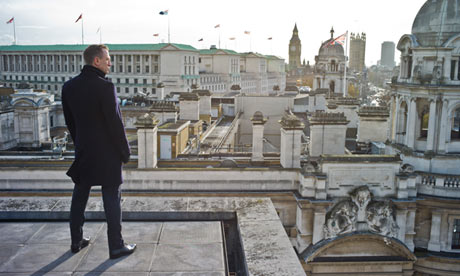
Skyfall: Worrying About the End

“This is the end,” Adele sings in the lush title song to the latest Bond movie, “Skyfall.” Apocalyptic thinking infects even our popular entertainments. And no wonder…Hurricane Sandy may have caused even global warming atheists and agnostics (I have had my doubts myself) to acknowledge at last that nature is taking its revenge on us, that flooded eastern seaboard cities may be our future. Terrorism haunts us still from the shadows. The bottom has fallen out of Syria and (as I write this) there is a real fear that Assad will use chemical weapons on his own people. The latest round of the Israeli-Palestinian conflict has only just played itself out in Gaza (and no one even pretends to think there won’t be another round). Behind the Kubuki theater of threats and counter-threats, diplomacy and crippling sanctions, lay the real possibility of a military strike by Israel (with or without the overt or covert cooperation of the U.S.) on Iran, almost certainly igniting a regional or global war. And “fiscal cliff” is now on everyone’s lips as a reminder--far, far, far, too late--that what we call "our way of life" is not a given.
     
"Skyfall," the movie, worries too about the end—the end of the usefulness of human intelligence in the face of those enemies in the shadows who wreck havoc through cyberspace. Worries about the end of the usefulness of the double-0 agents, and of Bond himself, (played again by Daniel Craig, and looking in "Skyfall" as if the miles have begun to take their toll). And in a bit of self-referential mockery it worries about the usefulness against such an enemy of all those gadgets and devices that Bond has used for 50 years to dodge death and surprise his enemies. (“What did you think you were getting, an exploding pen? We don’t really go in for that kind of thing anymore.”) And the end really does come to “M” in a shootout at Bond’s childhood home in Scotland, an affecting scene (and for the sake of the series a sad one, since it seems that any movie with Judy Dench in it can never be a really bad one.) It’s also a bit disappointing to this movie-goer that the villain wreaking worldwide havoc with cyberspacial ease is not a politically or religiously motivated visionary with a global agenda, but a demented sociopath with a personal one. But that too may be true, in its way, to our apocalyptic fears: all of human history may be at the mercy of such types.
Well, this is a Bond flick and people come to the theater to get away from politics. And so of course Bond and his devices do emerge victorious (he’s even equipped with a 60s vintage hotrod with headlights that fire bullets). The series promises to go on satisfying audiences, with Ralph Fiennes newly incarnated as M. And then there is that theme song by Adele, which is its own reward.